ChomChom Roller: A Plain Guide to the $25 Pet Hair Remover
Reader-supported — if you buy through our links we may earn a commission, at no extra cost to you. As an Amazon Associate I earn from qualifying purchases. Details
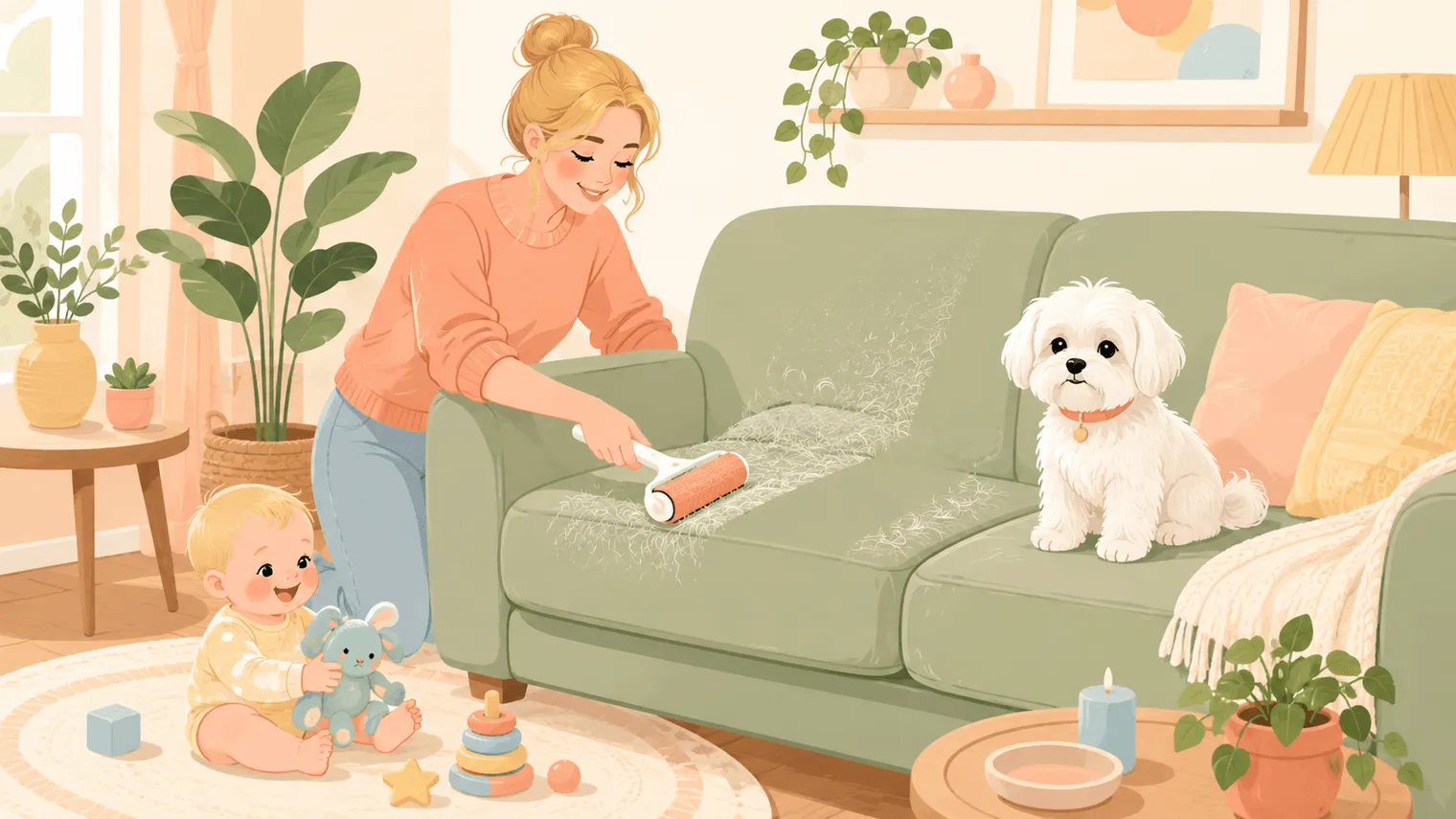
Every dog household owns a sofa with a secret: under the daily skim of the vacuum lives a woven-in layer of fur that has become, structurally, part of the upholstery. The ChomChom Roller — a plastic clamshell with two fabric strips and zero electronics — exists to excavate it, and a six-figure pile of mostly five-star Amazon ratings suggests it does the job for a lot of fur-covered homes. This guide is for anyone whose fabric has visibly surrendered to a shedding dog and who wants to know what the hype is and isn’t.
We haven’t tested this ourselves — this guide is built from the spec sheet, published hands-on reviews, the physics of static electricity, and the very consistent testimony of a large body of owner reviews. Where owners and the spec sheet disagree, we say so.
How does it work, and why is technique everything?
Inside the roller, two angled fabric strips alternate grabbing fur as the head rocks back and forth, building a static charge that lifts hair off fabric and flicks it into a collection chamber. The mechanism is the back-and-forth: roll it one direction like a lint roller and the strips never alternate, the charge never builds, and the tool picks up essentially nothing.
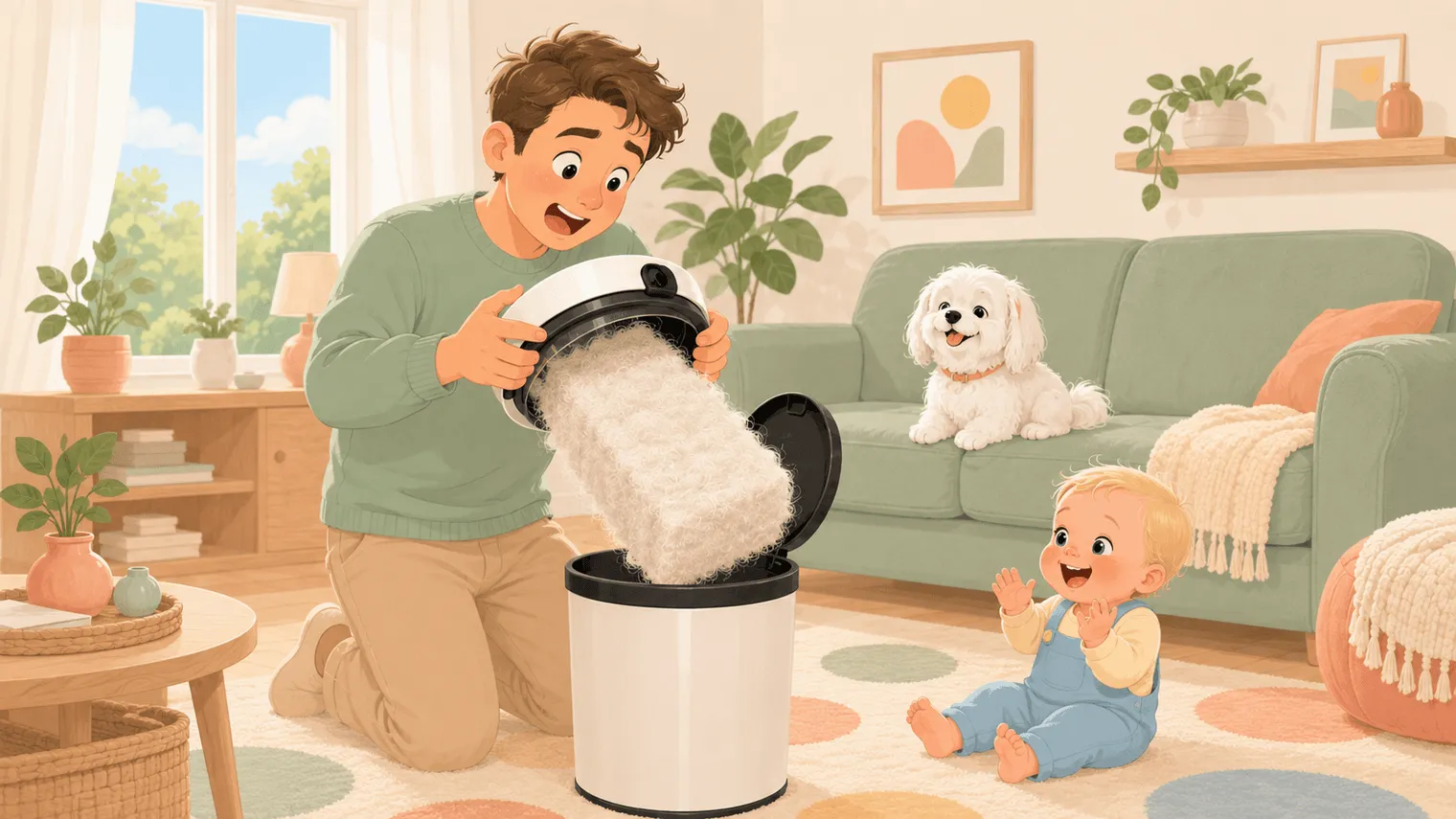
That’s the single most common complaint pattern in negative reviews, and owners describe it as a technique gap rather than a product flaw: short, brisk, back-and-forth strokes, with a bit of downward pressure. Owners say the knack arrives somewhere in the first week — followed immediately by the trademark experience of opening the chamber and confronting a felt brick of fur extracted from a sofa they’d have sworn was clean.
Why a dog-and-baby home is the use case
A baby’s world is fabric at fur altitude: play mats, nursing pillows, crib sheets, the sofa corner where everyone lives at 4 a.m. A vacuum handles floors; the ChomChom handles the soft layer where a crawler’s face actually goes — no adhesive sheets, batteries, or consumables, nothing to run out mid-clean, no noise to wake anyone. Owners keep mentioning that it’s one of the few cleaning tools you can use one-handed with a sleeping baby on your shoulder, which around here counts as a feature.
The honest boundaries, per owner reports: fabric surfaces that hold still. Owners say leather lacks the static cooperation, clothes bunch and travel with the roller, and carpet pile runs too deep — that’s robot vacuum territory. And several owners note that the release button sits close enough to the grip that an enthusiastic session occasionally pops the chamber open mid-roll; they learn to angle their thumb, and you probably will too.
What owners consistently like
The praise clusters tightly. Owners keep returning to the same headline: it pulls woven-in fur out of upholstery and bedding that lint rollers and vacuums skim right over, and it does it for around $25. The no-consumables design earns its own pile of comments — no adhesive refills to buy, no battery to charge, nothing to run out of mid-clean. And the chamber-reveal moment, gross as it is, shows up again and again as the thing that convinces people the tool is actually working.
Things to know before you buy
The most common complaint is the technique tax: owners who expect lint-roller behavior and swipe in one direction report it picks up nothing, then leave a one-star review before the knack clicks. It’s a real friction point even if it’s not a defect — budget a few sessions to learn the wrist flick.
Owners also report a finite lifespan: roughly six to twelve months of heavy use before the internal strips lose their grab, and there’s nothing to replace when they do. And a recurring theme in disappointed reviews is counterfeits — lookalikes with weaker internals circulate on marketplace listings, so owners advise buying from the official listing and checking the seller name.
Put plainly
If any fabric in your home has visibly given up to fur — sofa, bed, car seats, the dog’s own throne — and you’ll spend a few sessions learning the back-and-forth, owners are overwhelmingly glad they bought it; it tends to pay for itself against lint-roller refills inside a season. If your shedding problem lives on hard floors, leather furniture, or clothing, this is the wrong tool, and owners will tell you so. Learn the wrist flick, buy the real one, and prepare to be disgusted by your own sofa.
At a glance
ChomChom Roller
What stands out
- Owners say it pulls woven-in fur off sofas and bedding that lint rollers and vacuums skim over
- No batteries, no adhesive refills, no consumables — ever
- Empties in seconds; owners describe the fur chamber reveal as horrifying in the best way
Things to know
- Needs the short back-and-forth technique — owners report single swipes do nothing
- Fabric surfaces only — owners note leather, clothes, and carpet are someone else’s job
Questions families actually ask
Why is my ChomChom not picking anything up?
Technique, almost certainly. It only works with short, brisk back-and-forth strokes — the two internal fabric strips need the direction change to generate the static grab. Long single-direction swipes, lint-roller style, collect nothing. Most owners report it clicks within the first few sessions.
Does it work on clothes or carpet?
No on both, in owners' experience. Clothes move with the roller instead of letting it grab, and carpet pile is too deep. Owners say it shines on upholstery, bedding, car seats, and dog beds — fabric that stays put while you roll.
How long does one last?
Owners report roughly six to twelve months of heavy use before the internal strips lose their grab, longer with lighter shedding. There are no parts to replace — when it fades, it fades. At this price, owners note an annual replacement still undercuts a year of lint-roller refills.
Anything to watch for when buying?
Counterfeits, per owner reports — lookalikes with worse internals circulate on marketplace listings, and many disappointed reviews trace back to fakes. Buy from the official listing and check the seller name before checkout.