Greenies Pill Pockets Capsule Size: Easier Dosing, Safer Storage
Reader-supported — if you buy through our links we may earn a commission, at no extra cost to you. As an Amazon Associate I earn from qualifying purchases. Details
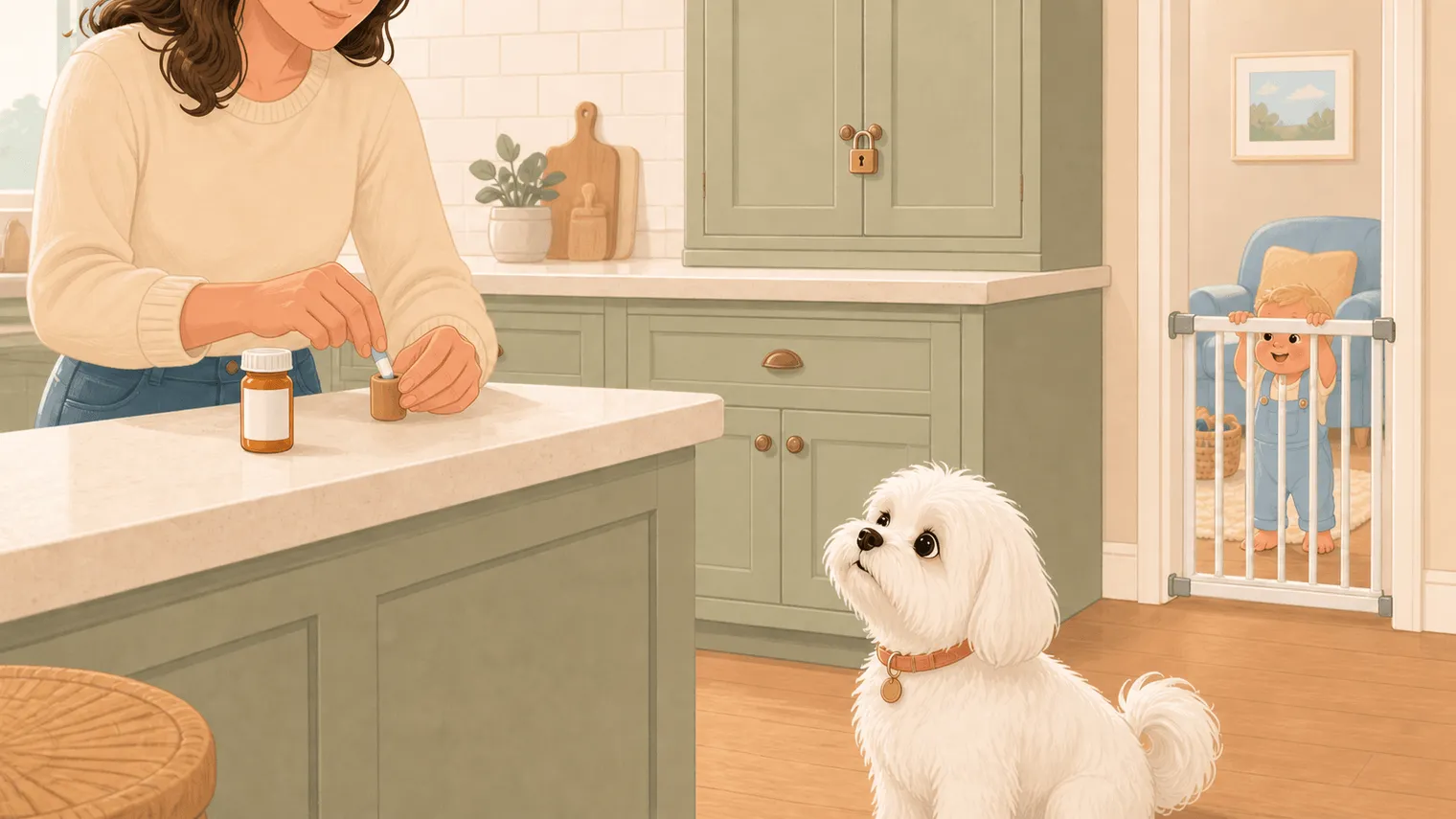
Greenies Pill Pockets solve a narrow but stressful problem: turning one prescribed pill into something many dogs willingly take. The chicken capsule-size version is soft, hollow, and large enough to close around common capsules. Its convenience should come with a strict routine, especially when a flavored medication and a curious baby share the home.
We have not personally tested this product. This guide is based on Greenies’ current product label, the exact US variant, FDA medication-safety guidance, and recurring owner feedback. It is not veterinary advice; the prescribing veterinarian’s directions always control.
Exact product, ingredients, and calories
This article covers the 15.8-ounce, 60-count chicken capsule-size value pack, Amazon ASIN B00HQM0UMS. It is not the smaller tablet size or another flavor.
Greenies lists chicken as the first ingredient. The formula also includes glycerin, wheat flour, wheat gluten, vegetable oil, dried corn syrup, and additional ingredients and trace nutrients. Guaranteed analysis is at least 12% crude protein and 9% crude fat, with no more than 28% moisture. Each capsule-size treat contains 23 kilocalories.
The manufacturer’s feeding guideline is one treat per 15 pounds of body weight per day, with fresh water available. Medication needs can vary, so discuss calories and treat quantity with the veterinarian when a small dog takes several daily doses, follows a restricted diet, or has food allergies. A Pill Pocket is a treat delivery aid, not the medicine itself.
What owners report
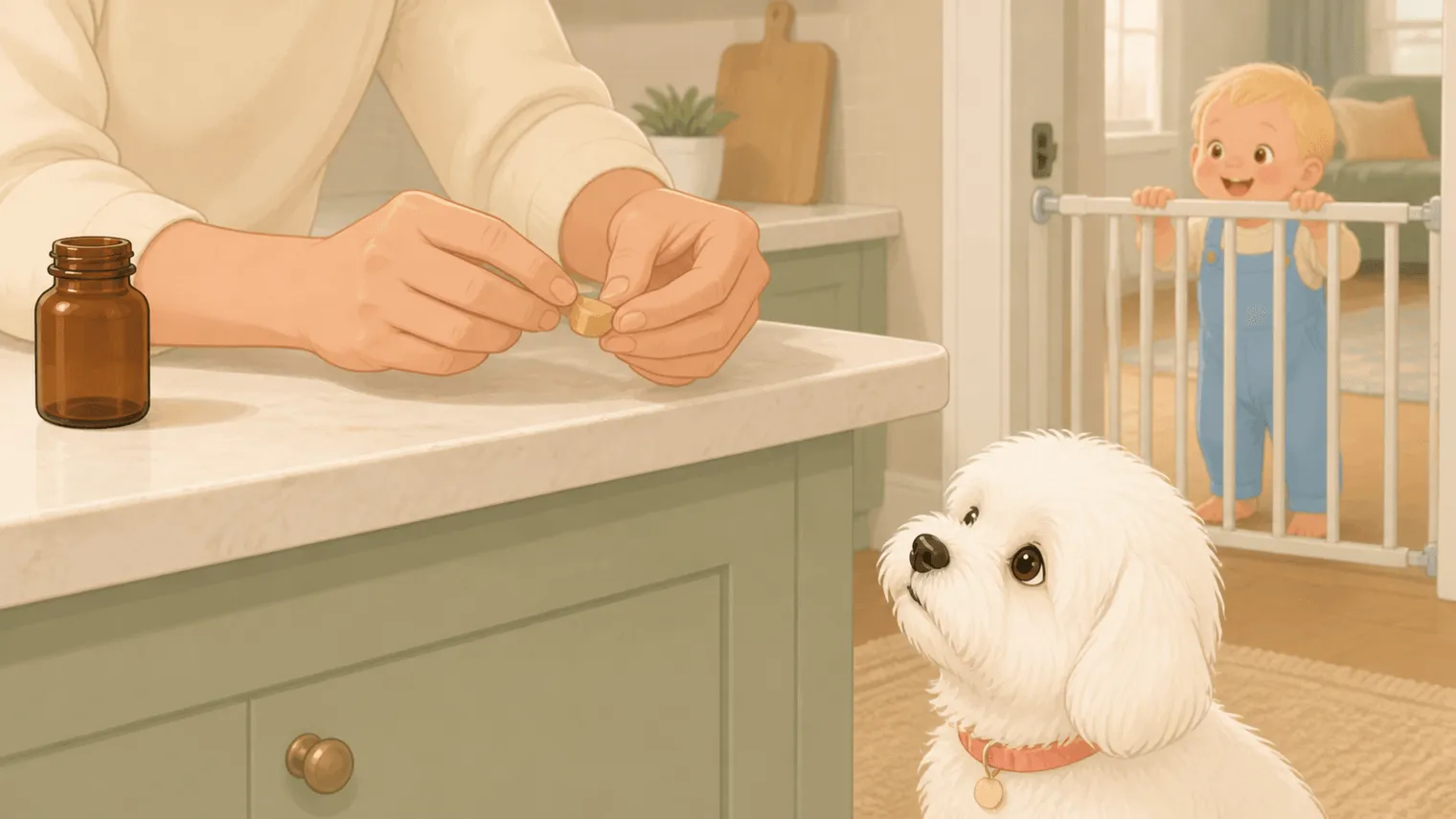
The dominant owner-review pattern is reduced conflict. Many dogs that reject a bare tablet accept the soft chicken treat, and owners like being able to press the opening closed around a capsule. Some use only enough material to cover a smaller pill, which can reduce calories and stretch the bag.
It does not fool every dog. Reviews and dog-community discussions describe skilled “pill sorters” that chew the treat, hold the medication in the cheek, and spit it out later. Watch until the dog has swallowed and check the floor and mouth area. If the pill appears again, do not automatically redose; you may create a double dose if part of the medication was already swallowed.
Texture is the other recurring issue. Owners occasionally receive or create a pouch that becomes dry and crumbly, especially when it is not sealed completely. Others report an unexpectedly moist or abnormal batch. Inspect smell, texture, and appearance, close the zipper promptly, and do not use treats that look spoiled or materially different from normal.
A safer three-step routine
First, read the prescription label and prepare only the current dose on a high, clear counter. Keep the drug in its original labeled container until that moment. Do not crush, split, or open a tablet or capsule unless the veterinarian or pharmacist specifically approves it; changing a drug can alter how it works or expose the handler.
Second, place the pill in the pocket and pinch the soft material closed without contaminating the remaining treats. Give it directly to the intended dog and observe swallowing. Some owners offer an empty small treat first and the loaded one second to encourage quick swallowing, but that adds calories and should not override feeding or medication instructions.
Third, account for the pill. If it drops, retrieve it immediately. If the dog refuses it, place the medication back under adult control and contact the veterinary team for alternatives. Never leave a prepared medicated treat in a bowl where another pet or a child could find it.
The FDA specifically warns that flavored pet medications can smell like treats and that child-resistant containers are not necessarily pet-resistant. Children may mistake chewable medicine for candy. A high counter is a work surface, not long-term storage.
Storage in a dog-and-baby home
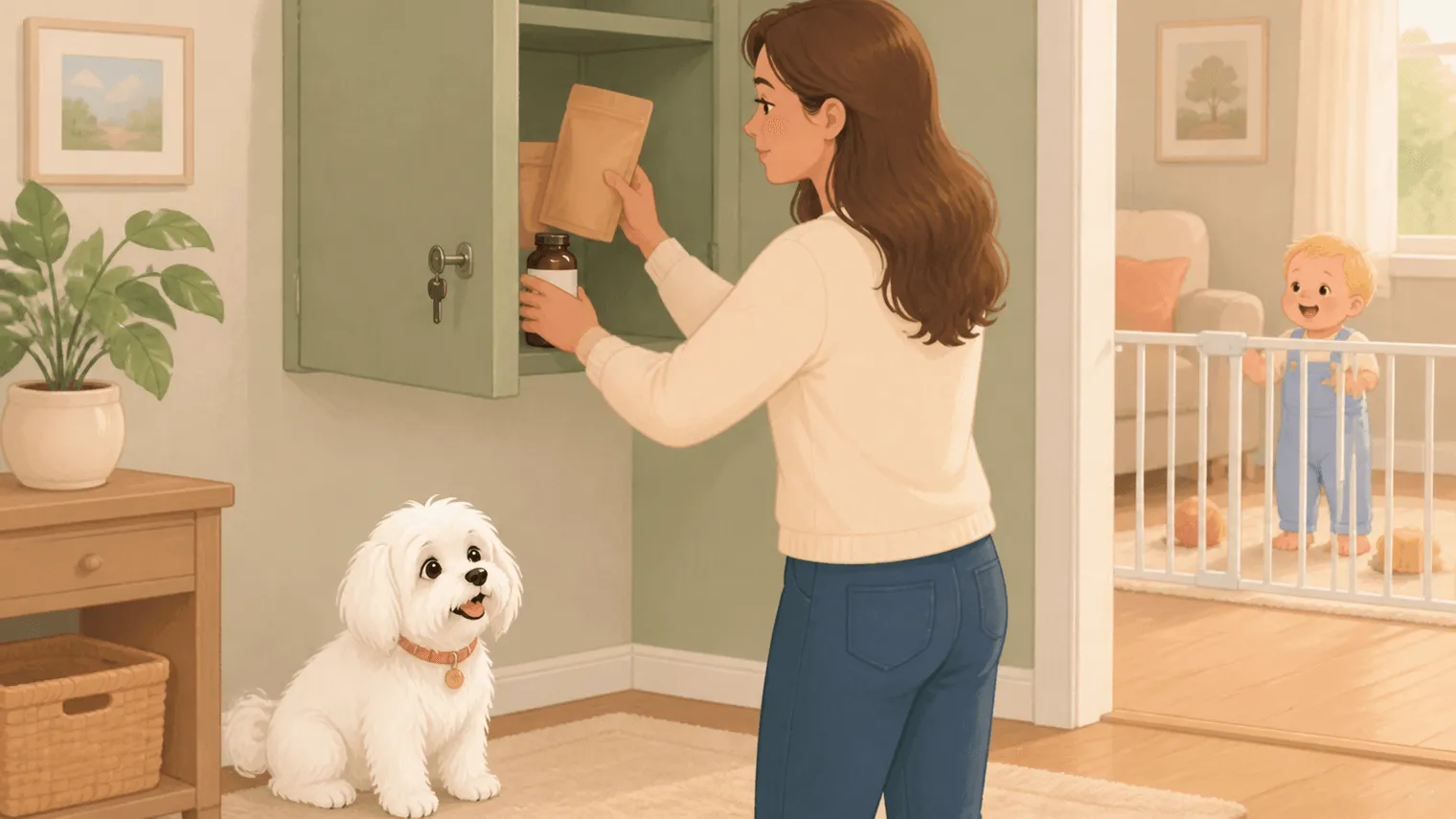
Reseal the Pill Pockets pouch and place it in a closed food-storage area the dog cannot open. Return medication to a locked cabinet in its original container, separate from human medicine. The bag of treats should not be stored beside the bottle in a way that encourages a caregiver to grab the wrong item during a rushed morning.
Keep an up-to-date medication list for the dog and make sure every caregiver knows the dose, time, and whether it must be given with food or on an empty stomach. A treat can conflict with certain instructions, so confirm with the veterinarian before using any pill-hiding food.
If a child, dog, or other pet may have swallowed the wrong medication or an unknown amount, contact the appropriate poison-control service and medical or veterinary professional immediately. Do not wait for symptoms.
Who should consider the 60-count bag
This value pack is most logical for a dog already known to like chicken Pill Pockets and taking regular capsule-size medication. The soft format is especially useful when cheese or peanut butter is messy, nutritionally unsuitable, or unreliable.
Start smaller or choose another method when the dog has chicken or wheat sensitivity, needs very tight calorie control, refuses this flavor, or consistently separates food from pills. Ask the veterinarian about a different formulation, flavored veterinary liquid, compounding option, or a direct-pilling demonstration when adherence is uncertain.
The product’s strength is convenience, not certainty. Used with dose verification, close observation, and locked storage, it can turn pill time into a short routine without making medicine look casual.
Sources consulted
- Greenies Pill Pockets capsule-size chicken product label
- FDA guidance on securely storing pet medications
- FDA guidance on preventing veterinary medication errors
- Chewy owner reviews for capsule-size Pill Pockets
- Walmart owner reviews for the 60-count chicken capsule size
- Dog-owner discussion of dried Pill Pockets
Specifications and links last verified August 19, 2026.
At a glance
Greenies Pill Pockets Capsule Size, Chicken, 60 Count
What stands out
- Soft hollow shape makes many capsules easier to conceal and seal
- Sixty-count value bag suits dogs taking regular medication
- Owner feedback repeatedly reports less struggle at pill time
Things to know
- Some dogs eat the treat and spit out the medication
- Chicken, wheat, and other ingredients may not fit every dog's diet
- Flavored treats and medicine require locked storage away from children and pets
Questions families actually ask
How many calories are in one capsule-size Pill Pocket?
Greenies lists 23 kilocalories per capsule-size chicken treat. Include that amount in the dog's daily calorie plan.
Can I split a Greenies Pill Pocket?
The soft treat can be molded around a smaller pill, but do not cut, crush, or open the medication itself unless the veterinarian or pharmacist says it is safe.
What if my dog spits the pill out?
Confirm the dose was not swallowed, retrieve the pill before a child or another pet reaches it, and ask your veterinarian about another technique rather than automatically giving a second dose.
Do Pill Pockets need refrigeration?
Follow the package storage directions and reseal the pouch promptly. Keep treats dry and keep the medication itself in its original labeled container.