Best Friends by Sheri Calming Bed: The Donut, Examined
Reader-supported — if you buy through our links we may earn a commission, at no extra cost to you. As an Amazon Associate I earn from qualifying purchases. Details
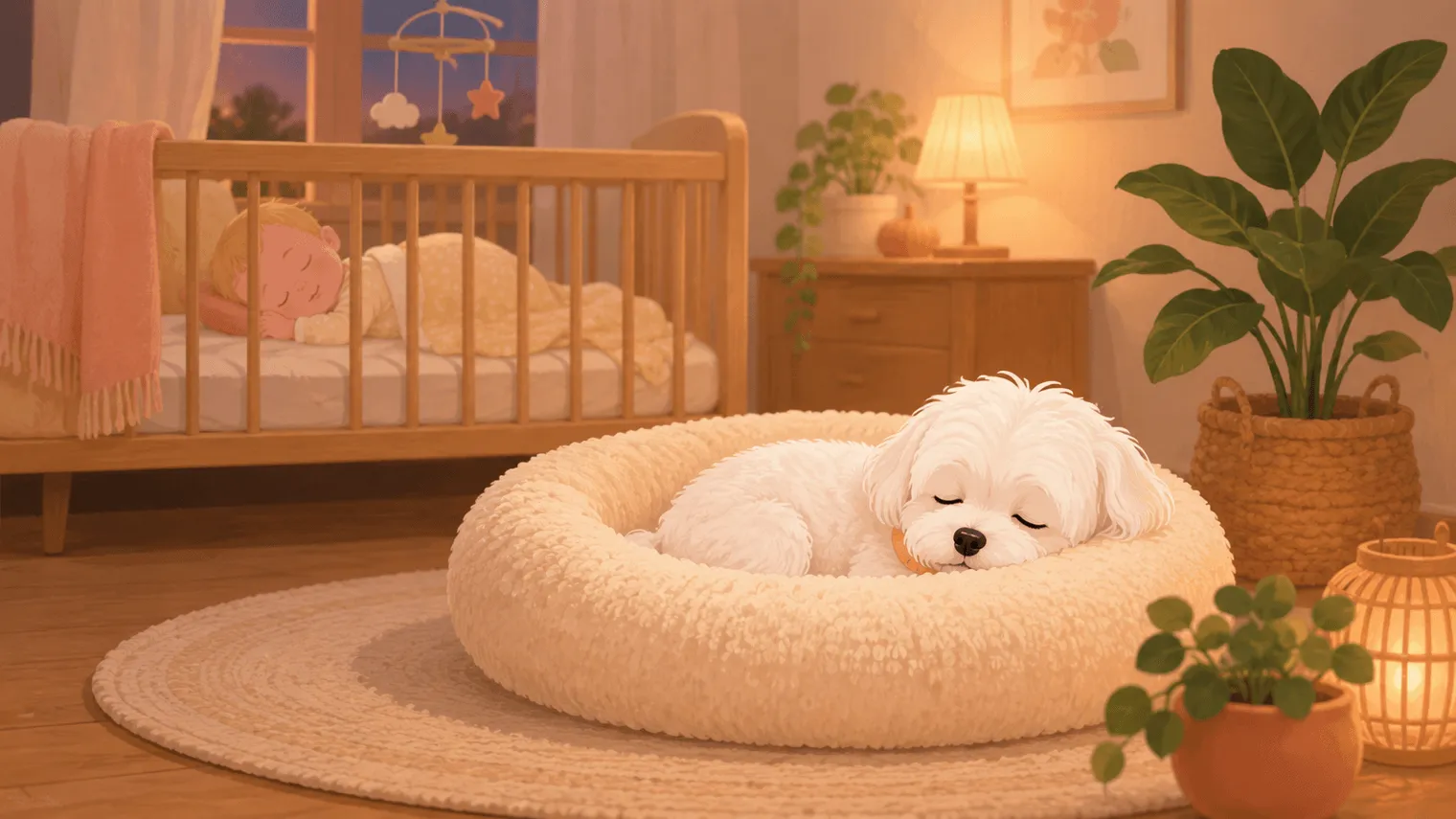
Few products on this site arrive with more internet momentum than the fur donut. It’s a plush, round nest with a raised rim, sold in several sizes and a stack of colors, and it’s been viral for years: the photogenic shape, the blissed-out dog, the word calming doing pull-ups in the product name. It’s aimed at curl-up sleepers — small dogs, spitz types, anxious dogs — and with a baby incoming and a dog needing a safe corner more than ever, it’s worth a clear-eyed look.
We haven’t tested this one ourselves — this guide is built from the spec sheet and the patterns across the donut’s unusually large, unusually photo-rich owner-review record, which is also unusually honest about wash day. Where owners and the marketing disagree, we’ll say so.
What the design actually does
Three real mechanisms, no magic. The raised rim gives lean-and-tuck sleepers a boundary to press against — the same instinct behind puppies sleeping in piles. The nest geometry conserves warmth for small and short-haired dogs. And the plush surface is simply nicer than the floor. For curl-up sleepers — terriers, spitz types, most small dogs, anxious dogs generally — owners report this combination is a landslide. For sprawlers (greyhounds, many big short-coated dogs), owners describe an expensive obstacle; those dogs want a flat mattress, and reviewers say no donut converts them.
A note on the name: the “calming” branding outruns what the bed can do. Owners of anxious curl-sleepers do report visibly calmer settling, which tracks with the rim-and-nest design — but it’s comfort that helps, not a treatment. No bed cures separation anxiety. Read it as excellent furniture with a comfort bonus, not therapy in a donut costume.
Why a dog + baby home is the use case
This bed’s best role in our world is the physical anchor of the dog’s safe zone. When the household reorganizes around a newborn, the dog needs one spot that never changes, never gets crawled on, and always pays out. A distinctive, beloved bed makes that spot legible — to the dog, and later to the toddler learning “we don’t touch the donut.” Put it in the quiet corner, gate the geography once the baby’s mobile, and the bed becomes policy infrastructure.
What owners consistently like
Owners in the curl-up demographic keep mentioning the same thing: their dog chooses the bed, and not just at bedtime. The rim-and-plush combination draws near-universal approval from small and anxious sleepers, and reviewers repeatedly describe it as the spot the dog retreats to when the house gets busy — which is exactly the job a new-baby home needs filled. For the price, owners also call it good value as the centerpiece of a safe corner.
Things to know before you buy
The most common complaint isn’t the bed — it’s wash day. The fur fabric that makes the product photogenic makes laundry an event. How you wash it depends on size, though: per the manufacturer, the small 18” and 23” beds go in whole, while the 30”, 36”, 45” and 54” sizes have a removable zipper cover — you unzip and wash just the shell, not the AirLoft fill. Either way, owners say to wash alone (the lint migrates onto everything else) and cold and gentle (heat mats the plush). Drying is where the whole-washed small beds get tedious — owners describe a near-full-day wait for those, while a removable cover dries much faster. Reviewers also report the rim stuffing shifting with aggressive cycles.
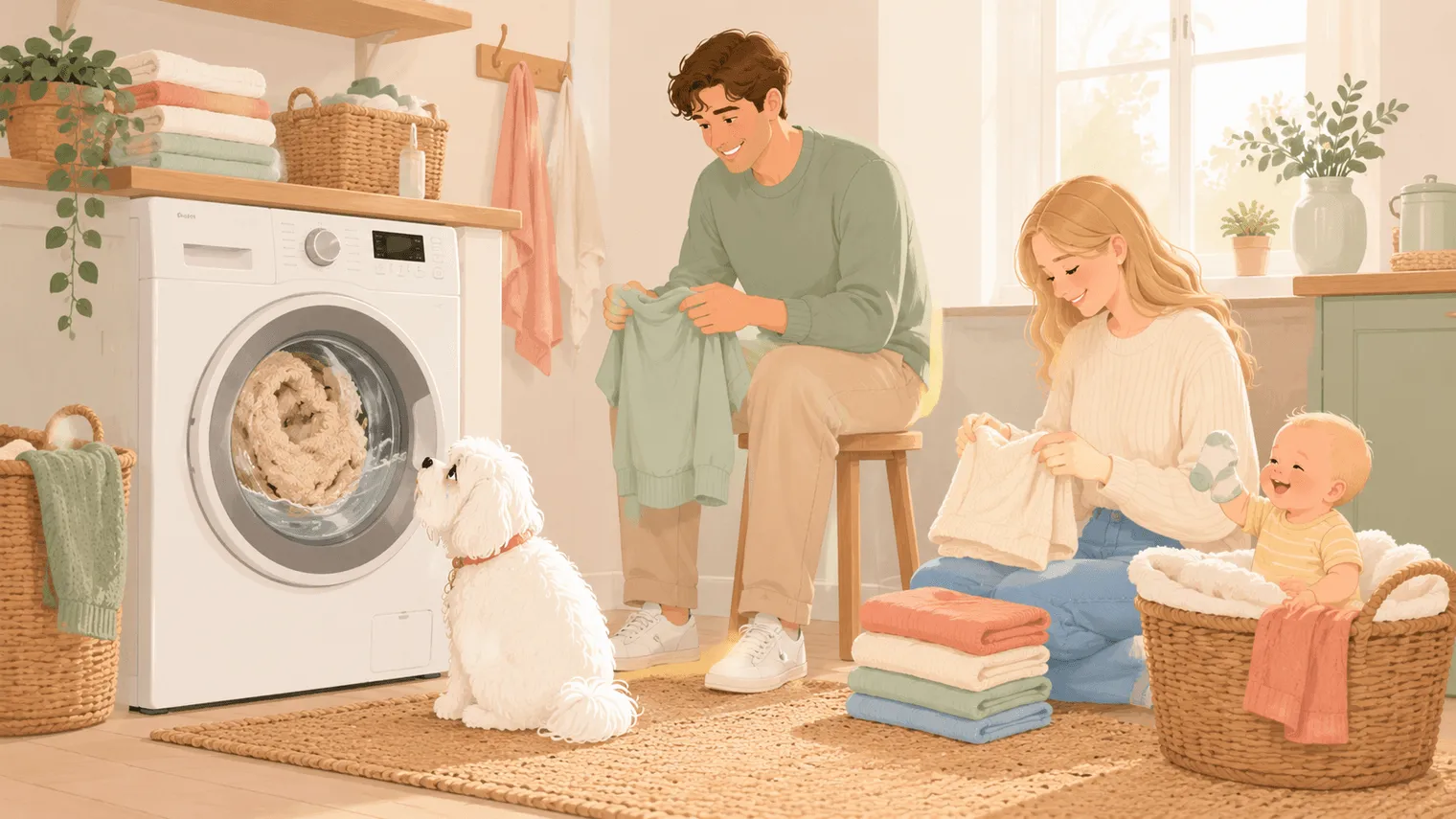
None of this is disqualifying; all of it belongs in the purchase decision, because in a dog-and-baby house the bed will need washing more than the photos suggest. The other thing to know: owners say it’s the wrong bed for active chewers and sprawlers — the plush is the first casualty in chewer photos, and flat-out sleepers ignore it.
Put plainly
If you’ve got a curl-up dog and you want a beloved, distinctive bed to anchor the safe corner your dog is about to need, owners in that camp are overwhelmingly glad they bought it — just go in treating it as comfort, not anxiety treatment, and respect wash day. If your dog is a chewer or a sprawler, or you wanted an actual anxiety fix in a box, this isn’t that.
At a glance
Best Friends by Sheri Calming Donut Bed
What stands out
- Owners in the curl-up demographic report near-universal approval of the raised-rim-plus-plush combination
- Owners use it as the anchor of a dog’s safe-space corner in a new-baby house
- Washable — small sizes go in whole; the 30"+ sizes have a removable zipper cover (see the FAQ)
Things to know
- Owners note the "calming" branding outruns what the bed does; it’s comfort, not a treatment
- The most common complaint is wash day: long dry times and a shedding fur fabric
Questions families actually ask
Is the "calming" effect real?
Partly. The design leans on real preferences — many dogs feel safer curled against a raised rim, and the nest shape conserves warmth — so owners of anxious curl-sleepers often report their dog settles visibly better. But it's furniture, not therapy: no bed treats separation anxiety. Think 'comfort that helps' rather than 'anxiety cure,' and pair it with the actual anxiety plan.
How do you wash it without ruining it?
First, check your size — the bed isn't washed the same way at every size. Per the manufacturer, the small beds (18" and 23") are machine-washed and dried as one whole unit, while the 30", 36", 45" and 54" sizes have a removable zipper cover: you unzip the shell and wash just the cover, not the fill (bestfriendsbysheri.com lists this on each size's product page). Either way, owners advise gentle cycle, alone (the fur sheds lint onto everything), in a front-loader if possible, then low-heat tumble or air dry. A washed-whole small bed is the slow one to dry — owners say budget most of a day; a removable cover dries far faster. Owners who hot-wash report matted fur, and a weekly shake-out plus spot cleaning stretches the full washes.
What size should I buy?
Measure the dog curled, not stretched — this is a nest, not a mattress. The dog should fit inside the rim with room to tuck. Between sizes, owners advise going up one; a rim pressing into the spine defeats the entire design.
Will the fur fabric survive a chewer?
Owners say no. This is the wrong bed for active chewers and dedicated diggers — the plush is the first casualty in owner photos. Settle the chewing habit first (a frozen Kong does wonders), then buy the nice bed.